
What industry & individuals are allowed to wear body camera?
Explanation:
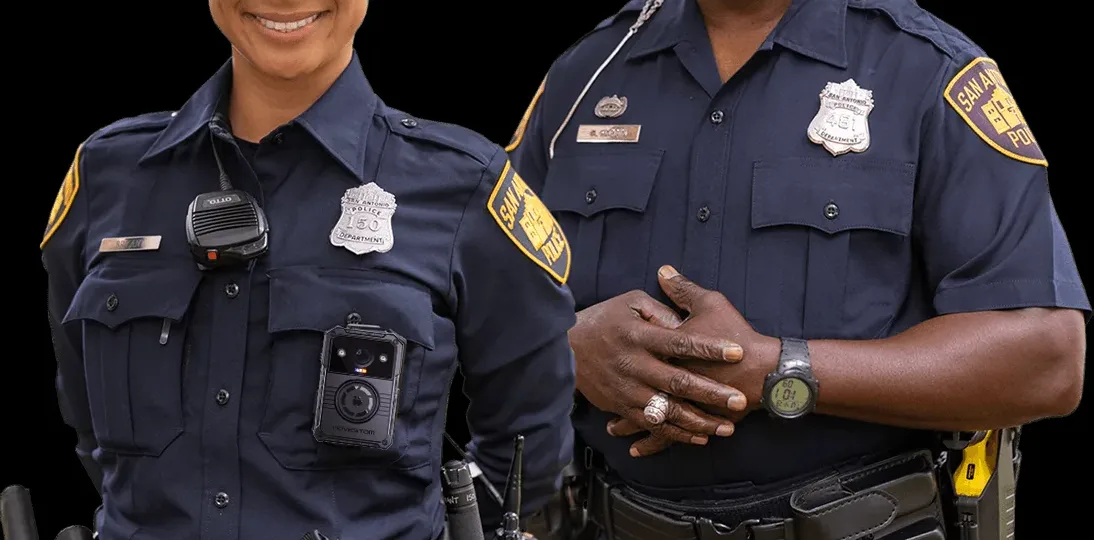
Body worn camera is primarily required to be worn by administrative law enforcement officers and police personnel while exercising public authority in the performance of their duties; certain field staff or security personnel at enterprises may also be equipped with them for evidence-gathering purposes, though they do not constitute "law enforcement" entities in the legal sense.
Core users and industries requiring wearing these badges:
Police officers: Wearing these badges is mandatory during all duties, including responding to calls, handling emergencies, and conducting investigations. It is a requirement mandated by the Ministry of Public Security.
Comprehensive administrative law enforcement personnel: In the fields of urban management, market supervision, ecological environment, transportation, health, emergency management, and natural resources, they should wear masks when conducting on-site inspections, investigations, inquiries, and enforcement measures.
Other administrative law enforcement personnel: including front-line law enforcement personnel from departments with administrative penalty/enforcement powers according to law, such as taxation, customs, immigration management, and fire and rescue.
Judicial support personnel: Some court bailiffs and prison management personnel are equipped with and used when performing specific official duties.
Non-public service extension scenarios (non-enforcement): Field positions such as property security, power/railway inspection, and engineering after-sales can be equipped with similar equipment for process record keeping and dispute evidence collection. However, their records do not have the legal priority of "enforcement evidence" and must be used in accordance with the company's regulations. however, such recordings do not carry the statutory priority of "body worn cameras" and must be used in accordance with corporate policies.
Key Defining Principles:
Identity Prerequisite: The wearer must be representing a state agency or an organization authorized by laws and regulations and is lawfully performing official duties; ordinary citizens have no right to wear or use the device to interfere with others in the name of "law enforcement".
Scenario Restrictions: This function can only be activated during interactive law enforcement/field operations such as on-site handling, inspection, investigation, and enforcement measures. Recording content unrelated to official duties or disseminating it privately is strictly prohibited.
Equipment type: Specialized cameras for public security and administrative law enforcement usually need to comply with national standards for evidence collection (anti-tampering, encrypted storage); civilian/enterprise versions are only used as ordinary recording tools, and their functions and legal effect are different. civilian or enterprise-grade versions serve merely as standard video recording tools, differing in both functionality and legal validity.
We recommend the following top-tier body camera:
The NOVESTOM NVS4-T Pro is a highly stable and compatible 4G live-streaming body camera designed for video dispatch operations.
Transmission protocol support: Compatible with Wi-Fi6 and RTSP/RTMP standard streaming media protocols, it can directly connect to mainstream visualization command platforms to achieve low-latency transmission of on-site images.
Transmission stability: Relying on an industrial-grade hardware forwarding architecture, in scenarios where multiple terminals simultaneously upload high-definition videos, network congestion, packet loss, and stuttering issues can be avoided, ensuring priority transmission of core images.
Supporting management capabilities: Paired with the CMSV visual command system, it supports remote real-time viewing of live stream footage, downloading of recordings, and remote control of cameras. It can be deployed on local or cloud servers to meet the deployment needs of different organizations.
In short, the core principle is "whoever enforces the law, wears the device"; although non-law enforcement positions may use similar equipment, it cannot be called a "body worn camera" to exercise public power.